Tank water heaters
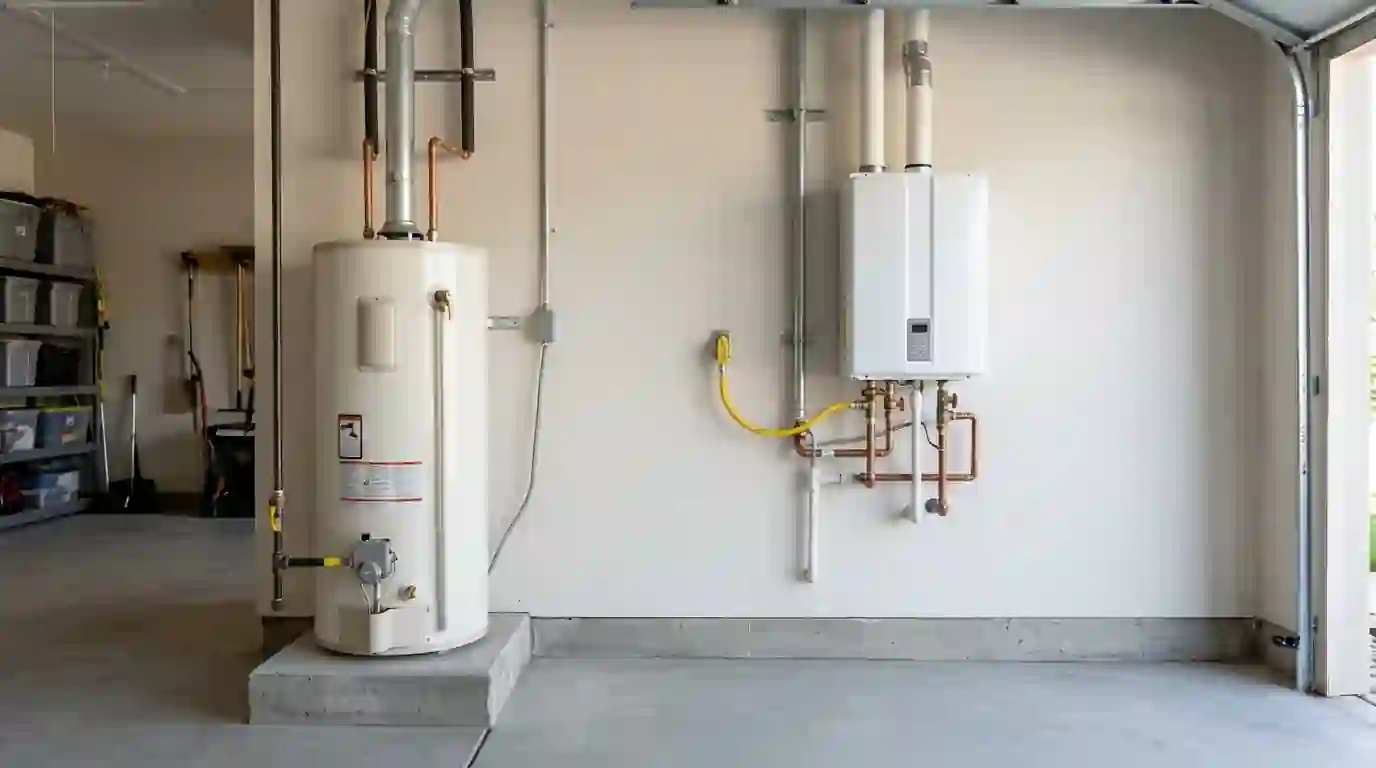
Tanks cost less to install, are familiar and work with existing venting and wiring. They can run out of hot water with heavy use.
Tankless water heaters
Tankless units heat water on demand and do not run out within their rated flow. Gas units often need a larger gas line and new venting.
Heat pump water heaters
Heat pump units are tanks that use far less electricity. They suit all-electric homes with a garage or large utility room.
How to decide
Consider how long you will stay, your fuel type, your space, and how your family uses hot water.
- Gas available: tank or tankless
- All-electric home: heat pump
- Short stay: tank
- Big tub or large family: tankless or larger tank
Costs beyond the price tag
A tankless unit usually costs more to install than a tank, especially when the gas line needs to be upsized or venting changed. It can save on energy and last longer, but the savings take years to add up. A heat pump water heater costs more than a standard electric tank but uses far less electricity, which pays back faster in an all-electric home.
A tank is still the right answer for many homes, particularly if you plan to move in a few years or have limited gas service.
Sizing for Upstate winters
Incoming water is much colder in January than in July. A tankless unit sized only for summer will struggle on a cold morning when two showers run at once. Size for the coldest month, and if your home is on a well, plan on more frequent descaling.
Questions readers ask
Is tankless worth it in the Upstate?
For many homes with gas and a long stay ahead, yes. Sizing for winter water temperatures is important.
Can a heat pump water heater go in a closet?
Usually not. It needs air volume and works best in a garage or large utility room.
Sidney Treadway edits Homeowner Help for Plumbcraft Services, turning the questions our plumbers hear on calls into plain, practical articles for Upstate homeowners. About the editor