
Most homes should run between 40 and 80 psi. If a hose bib gauge reads higher, or if fixtures drip and toilets run often, the pressure reducing valve may be missing or failed. Use our water pressure check page to see where your reading falls.
Signs you need pressure reducing valve service
- Pressure readings over 80 psi
- Banging pipes or water hammer
- Toilets that run and faucets that drip often
- A relief valve dripping at the water heater
- Pressure that changes through the day
How we handle it
- Test pressureA gauge on a hose bib shows static pressure and how it changes.
- Inspect the valveIf there is a valve, we check whether it is holding its setting.
- Replace or installNew pressure reducing valve near the main, with an expansion tank if needed.
- Set and confirmSet to the right level and checked across the house.
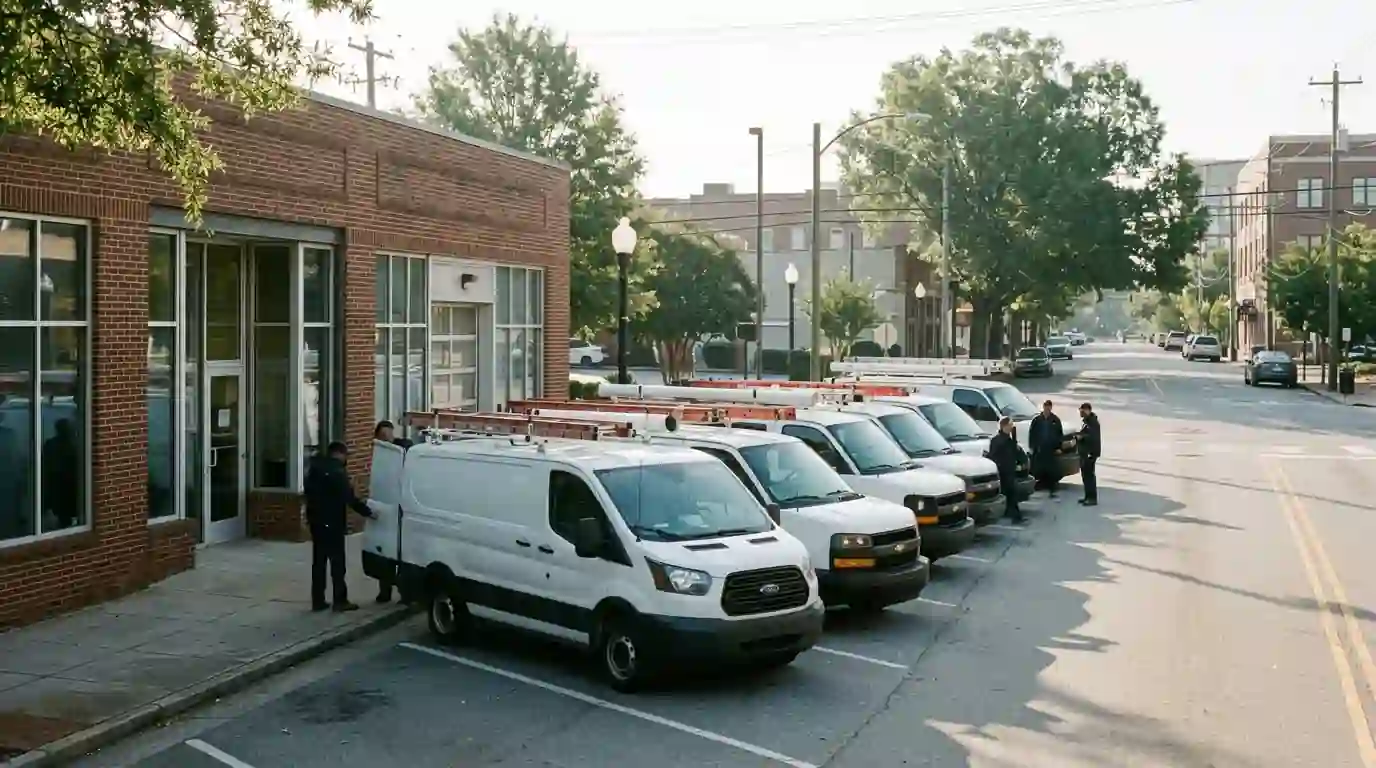
What pressure reducing valve service usually costs around Greenville
| Job | Typical range |
|---|---|
| Pressure test and adjustment | $125 to $195 |
| Pressure reducing valve replacement | $395 to $795 |
| Thermal expansion tank installation | $245 to $465 |
Ranges reflect common jobs in Greenville and nearby towns. Access, materials and the hour of the call change the final number, and you get an exact price before work starts. Compare prices across all services.
What you can do before we arrive
Use our pressure check page with a hardware store gauge before you call. Knowing your reading tells us whether the valve is failing, missing or fine.
What we see in Upstate homes
Water pressure varies a lot across the Upstate because of elevation. Homes in low areas or near large mains can see high pressure, while hilltop homes and those near the end of a line can run low. We test before recommending anything.
Keeping it from coming back
Test pressure once a year. Valves drift over time, and catching high pressure early protects every fixture in the house.
Questions about pressure reducing valve service
What is normal water pressure for a house?
Between 40 and 80 psi is the usual safe range. Many plumbers aim for 50 to 70.
Why do I need an expansion tank?
When a pressure reducing valve or backflow device closes off the system, heated water has nowhere to expand. The tank absorbs it.
Can low pressure be fixed?
Sometimes. It can be a failing valve, clogged pipes or a supply issue. We test to find out.
Areas we cover for pressure reducing valve service
Plumbcraft sends pressure reducing valve service crews from Greenville and Belton across the Upstate.