Age is the first clue
Most tank heaters last 8 to 12 years. The serial number on the label usually encodes the manufacture date. If yours is past ten years, start planning.
Signs worth paying attention to
Some symptoms point to a part that can be replaced. Others point to a tank that is wearing out.
- Rusty hot water
- Rumbling or popping
- Water around the base
- Hot water running out sooner
- A relief valve that drips
- Moisture on the tank body
- Repeated repairs
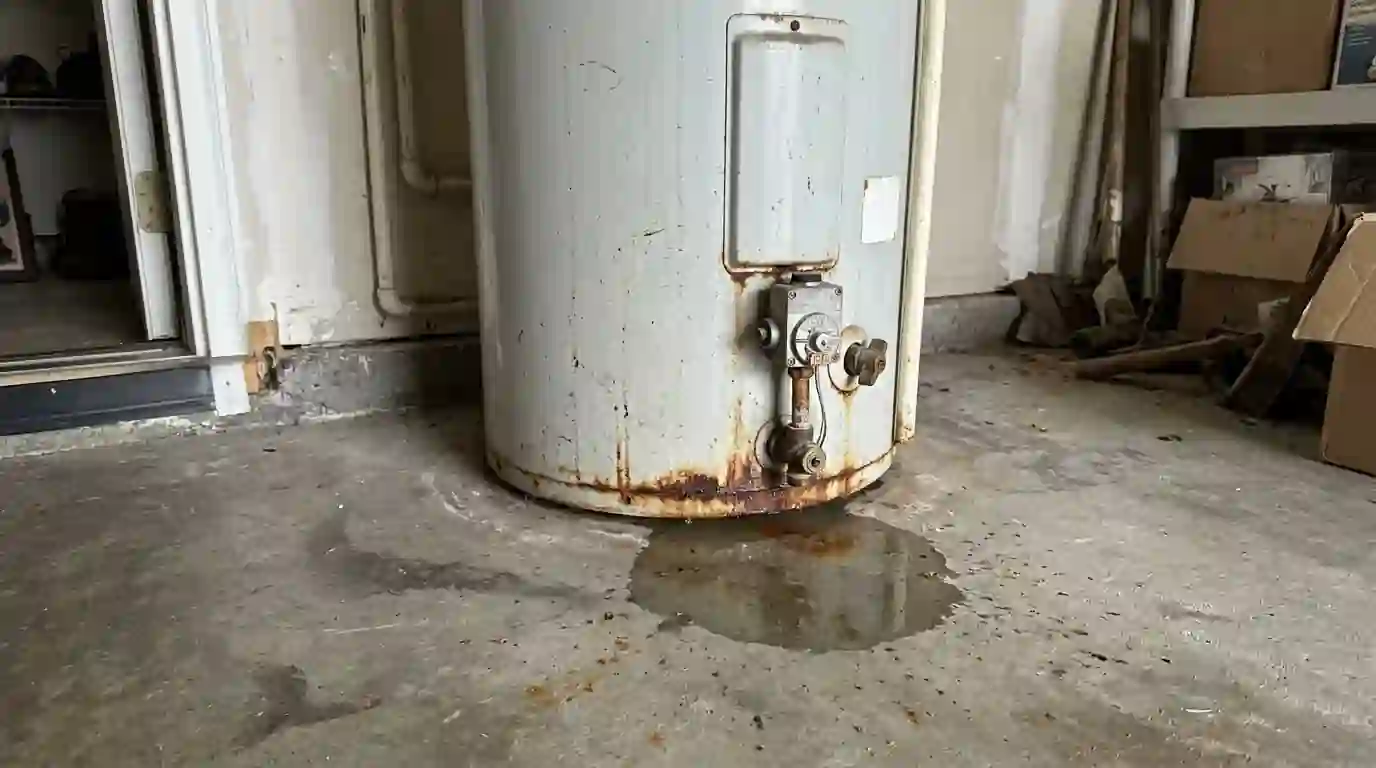
Repair or replace
A failed element, thermostat or igniter on a younger tank is usually worth repairing. A leaking tank body is not; it needs replacing.
Plan the replacement
Decide on size, fuel and location ahead of time. If you want a tankless or heat pump unit, planning gives time to check gas lines, venting or electrical service.
Gas and electric fail differently
Gas heaters most often lose hot water because of a thermocouple, igniter or gas valve problem, and they show rust and soot around the burner when venting is poor. Electric heaters lose hot water when an element burns out or a thermostat fails, often one at a time, so the first sign is water that runs lukewarm sooner than it used to.
Both types suffer from sediment, which makes the tank work harder and rumble as it heats.
Where the heater sits matters
A tank in the garage can leak onto concrete with little harm. A tank in an attic, a hall closet or over a finished space can do real damage when it fails. If yours is in one of those spots, make sure it has a drain pan and a drain line, and plan replacement on the early side of its life.
Questions readers ask
How do I read the age of my water heater?
The serial number on the label usually includes the month and year. The format varies by brand.
Does flushing extend tank life?
It can help by removing sediment, especially on tanks that have been flushed regularly.
Sidney Treadway edits Homeowner Help for Plumbcraft Services, turning the questions our plumbers hear on calls into plain, practical articles for Upstate homeowners. About the editor