Know where your risk is
Pipes freeze where cold air reaches them: crawl spaces with open vents, exterior walls, attics over garages, and well houses. Laundry rooms and kitchen sinks on outside walls are common trouble spots.
Before the cold arrives
Disconnect garden hoses, close or cover foundation vents, and insulate exposed lines. If a pipe has frozen before, it will freeze again unless something changes.
- Disconnect hoses from outdoor spigots
- Cover crawl space vents
- Insulate exposed pipes
- Heat the well house
On the coldest nights
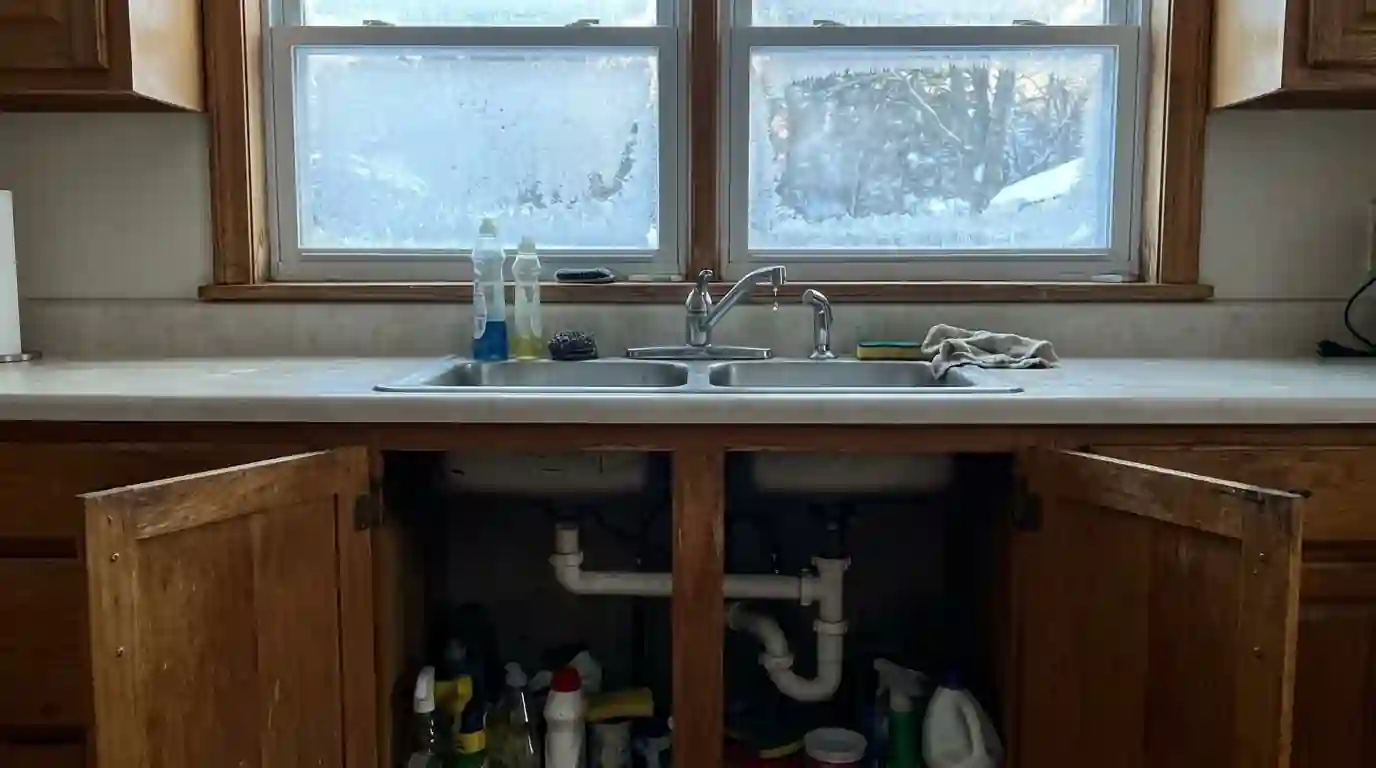
Open cabinet doors on outside walls, let a slow drip run from faucets on exterior walls, and keep the thermostat steady. Do not set the heat very low overnight.
If a pipe freezes anyway
Leave the faucet open, warm the area with a space heater kept away from anything flammable, and never use an open flame. If you see a split, close the main shut-off right away.
Vacant homes and rentals need more
A house that sits empty during a cold snap has no one to notice a frozen line or open a faucet. If a home will be vacant for more than a few days in winter, either keep the heat on at a steady temperature with someone checking in, or have the system drained and winterized.
Rentals around Clemson and lake homes on Keowee and Hartwell are the most common places we find split pipes that ran for days before anyone saw them.
After the freeze passes
Walk the crawl space or look under cabinets once temperatures rise. A pipe that froze but did not split right away can still leak at a stressed fitting once pressure and warmth return. Check the water meter with everything off; if it moves, something is leaking.
Questions readers ask
At what temperature do pipes freeze in Upstate homes?
Exposed pipes are at risk when temperatures stay in the low twenties or below for several hours, especially with wind.
Does dripping a faucet really help?
Yes. Moving water is less likely to freeze, and an open tap relieves pressure if ice forms.
Sidney Treadway edits Homeowner Help for Plumbcraft Services, turning the questions our plumbers hear on calls into plain, practical articles for Upstate homeowners. About the editor