Signs from above
Musty odors, soft floors near bathrooms, rising water bills and humidity can all point to a leak below.
What to look for below
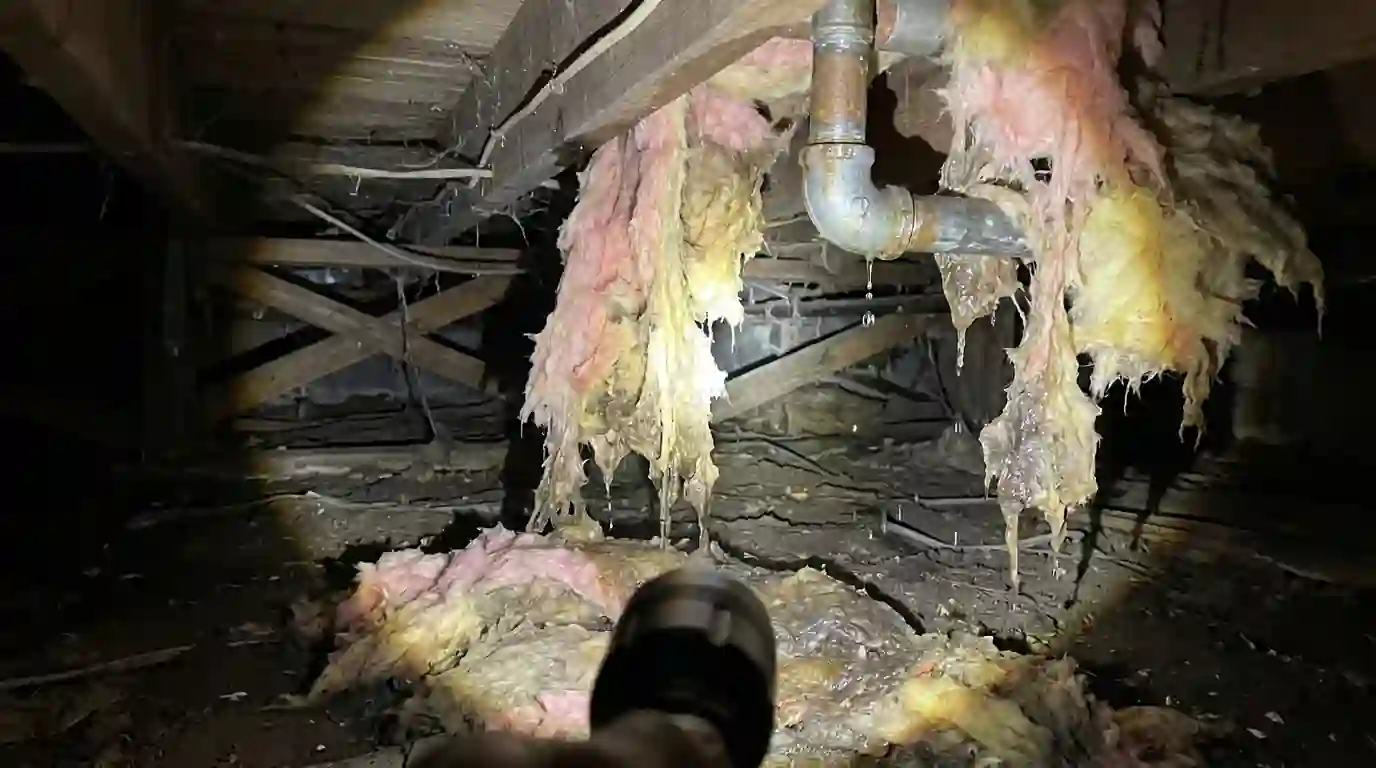
With a flashlight, look for wet insulation, stains on subfloor, drips at fittings and sagging drain lines.
- Wet or fallen insulation
- Dark stains on wood
- Puddles
- Sagging drain lines
Why drains sag
Drain lines need support every few feet. Over time, hangers fail and lines sag, holding water and stressing joints.
When to call
If you see active drips, standing water or wood damage, call a plumber before it spreads.
Leaks versus condensation
In humid Upstate summers, cold water lines in a crawl space can sweat enough to drip, which looks like a leak. If the drips stop on cooler, drier days and the water meter does not move with everything off, condensation is the likely cause. Insulating the cold lines and improving the vapor barrier usually solves it.
A true leak keeps going no matter the weather, and the meter will show it.
What we do on a crawl space inspection
We follow each supply and drain line from where it enters the house to the fixtures, look for wet insulation and stained wood, check that drains are supported and sloped, and look at the water heater connections if it sits under the house. You get photos of anything that needs attention.
Questions readers ask
Is some moisture normal in a crawl space?
Some humidity is normal, but standing water or wet wood is not.
Can a plumber also fix crawl space drainage?
Yes, sump pumps and yard drains are part of plumbing work.
Sidney Treadway edits Homeowner Help for Plumbcraft Services, turning the questions our plumbers hear on calls into plain, practical articles for Upstate homeowners. About the editor