Stop the water first
If the bowl is rising, take the lid off the tank and push the flapper closed with your hand, then close the valve on the wall behind the toilet. Turning it clockwise stops the tank from refilling. If the valve will not turn, close the main shut-off.
Use the right plunger
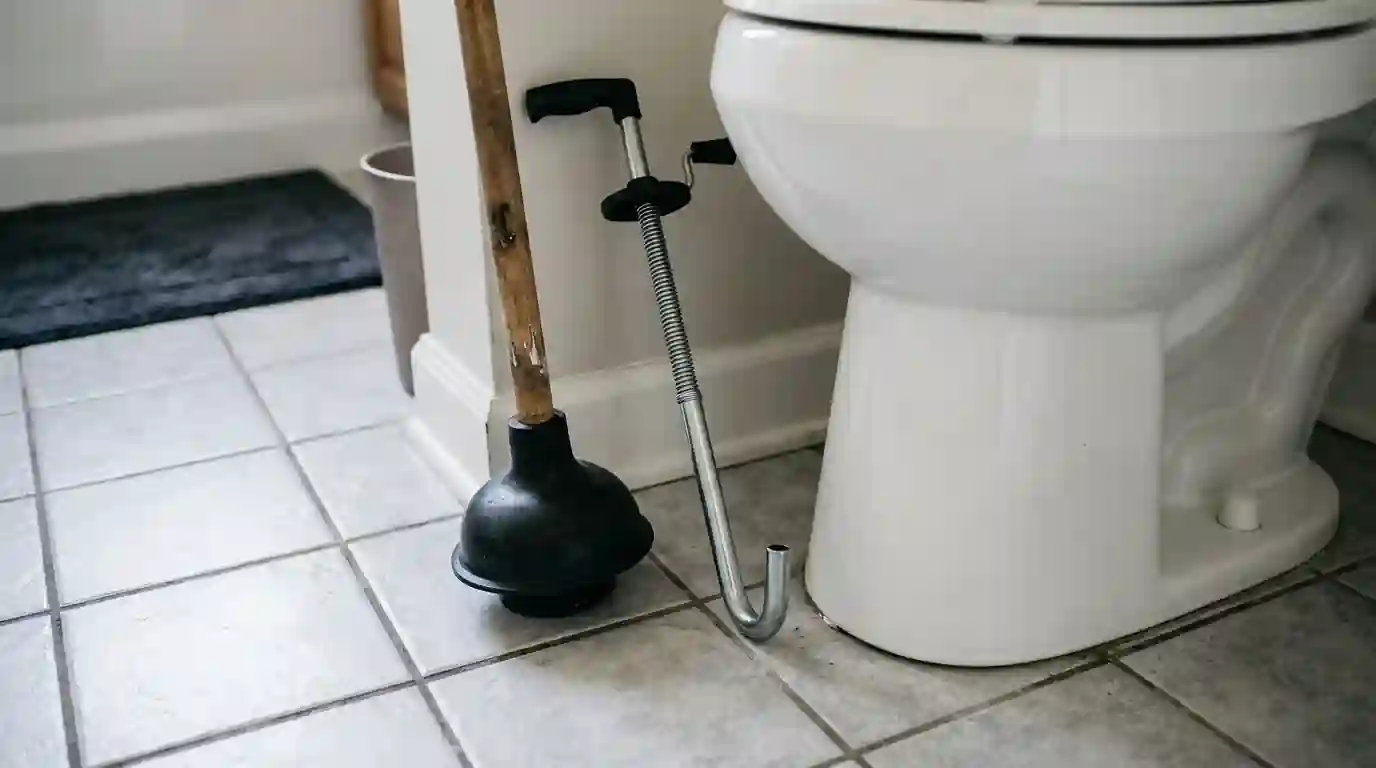
A flat cup plunger is made for sinks. Toilets need a flange plunger, the kind with a soft extension at the bottom that seals into the drain opening. Make sure there is enough water to cover the cup, push gently to seal, then work it firmly up and down a dozen times.
- Flange plunger, not a flat cup
- Water covering the cup
- Steady pushes, not wild strokes
- Stop if the bowl nears the rim
When it is not just the toilet
If the tub gurgles or fills when you flush, or several drains are slow at once, the clog is past the toilet in the branch or main line. Plunging will not fix that, and every flush makes it worse. Stop using water and call.
What to avoid
Chemical drain cleaners rarely clear a toilet, can damage the wax seal, and make the job dangerous for anyone who works on it next. A wire coat hanger can scratch the porcelain. A closet auger, made for toilets, is the safe tool if plunging fails.
If it keeps happening
A toilet that clogs every week usually has a cause: an early low-flow bowl from the 1990s, a partial blockage further down the line, or habits like flushing wipes. Find the cause instead of plunging forever; a camera look at the line answers it quickly.
Questions readers ask
Can I use dish soap and hot water on a clogged toilet?
Sometimes a squirt of dish soap and warm (not boiling) water helps loosen a soft clog. Boiling water can crack porcelain.
What if something like a toy fell into the toilet?
Do not plunge, which can push it deeper. Retrieve it if you can see it; otherwise the toilet may need to be lifted.
Sidney Treadway edits Homeowner Help for Plumbcraft Services, turning the questions our plumbers hear on calls into plain, practical articles for Upstate homeowners. About the editor